Category: Uncategorized
-
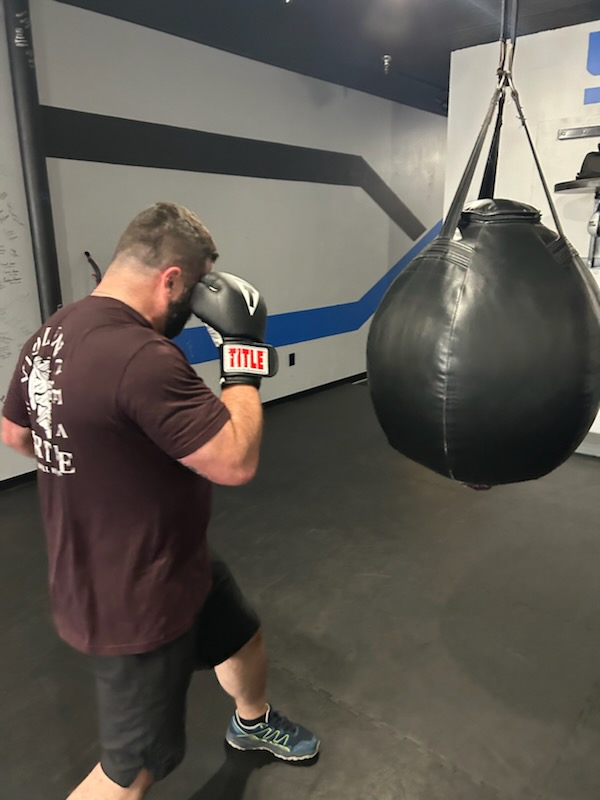
I’ve written and spoken about this before, but I plan on spending time collecting data on the topic for a future presentation. Think about it like this – As a SSO, SRO, or school/campus security officer, you may have to sprint across a campus then engage a deadly threat and be responsible for every round that leaves your firearm. To do this, you have to have a certain amount of both tactical proficiency and cardiovascular fitness. Remember – There’s security, and there’s the illusion of security. Which one are you providing? As a client, parent, or student, which one are you paying for?
-
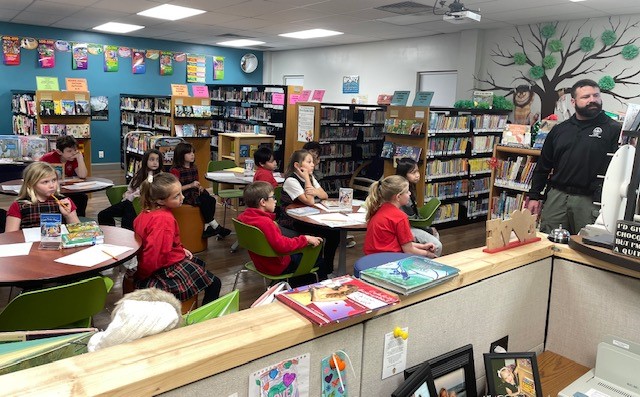
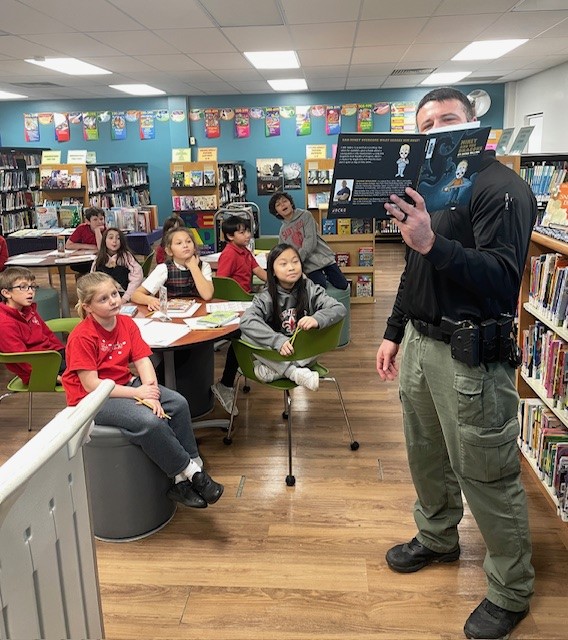
Yesterday, I spent some time reading to some of our 3rd grade students during library. One reason why I prefer the SRO/SSO concept over contract armed security is because of the SRO/SSO “Triad.” In addition to enforcement or security, the other aspects of the triad are “educator” and “counselor/mentor.” Positive relationship building is an important part of school safety and security.
-
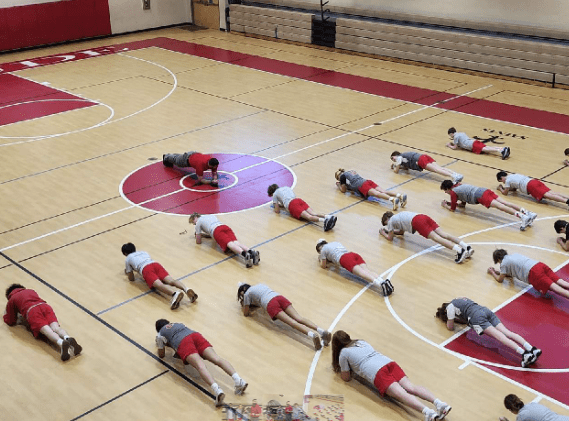
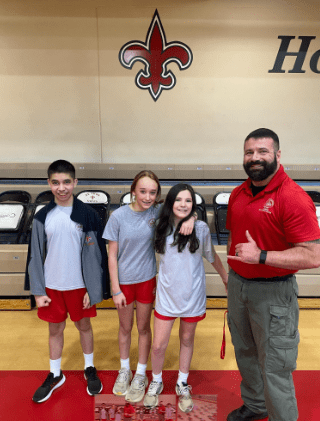
At SJS, the 7th & 8th grade P.E. classes are helping me prepare for my physical fitness test. Today’s challenge was a plank challenge. Appropriate physical fitness for school safety and security personnel is extremely important to me. It goes hand in hand with officer presence, and studies and after action reports have shown that appropriate officer presence is the number one deterrent in combating intruders, as well as the most cost effective. Coming from law enforcement, a lot of people may not realize that, unless you are in a specialized unit like SWAT or special operations, the fitness test that one takes to become a law enforcement officer, is the last one that they take. I have always found this problematic, so when I got hired on at St. Jude, I wrote an annual fitness test into our SSO policy. I can say, with confidence, that St. Jude School is the only school in the Chattanooga area (public or private) that has an on-going fitness standard for their SSO or school security personnel. The three students pictured received a SSO challenge coin for making it to the four minute mark with me.
-
After serving in the military, and working in law enforcement and as an EMT, I truly believe that school safety is my calling and vocation, and I am thankful for my experience in those other fields because they led me here and gave me tools that I can use in my current field. There are times when this job isn’t easy. As a School Safety Officer (SSO), you work in a school, but you’re not necessarily part of the tribe. You’re not an educator., and sometimes, they’ll let you know it. While, at my current school, I will say that I have a great working relationship with the principal and most of the staff, that’s not always been the case at some of the other schools I’ve worked at or consulted for. Remember – SSO’s are outsiders. A necessary evil for some, and it can be tiresome navigating office and institutional politics, as well as egos, but when you truly know your Why, you can easily put up with any Who or How.
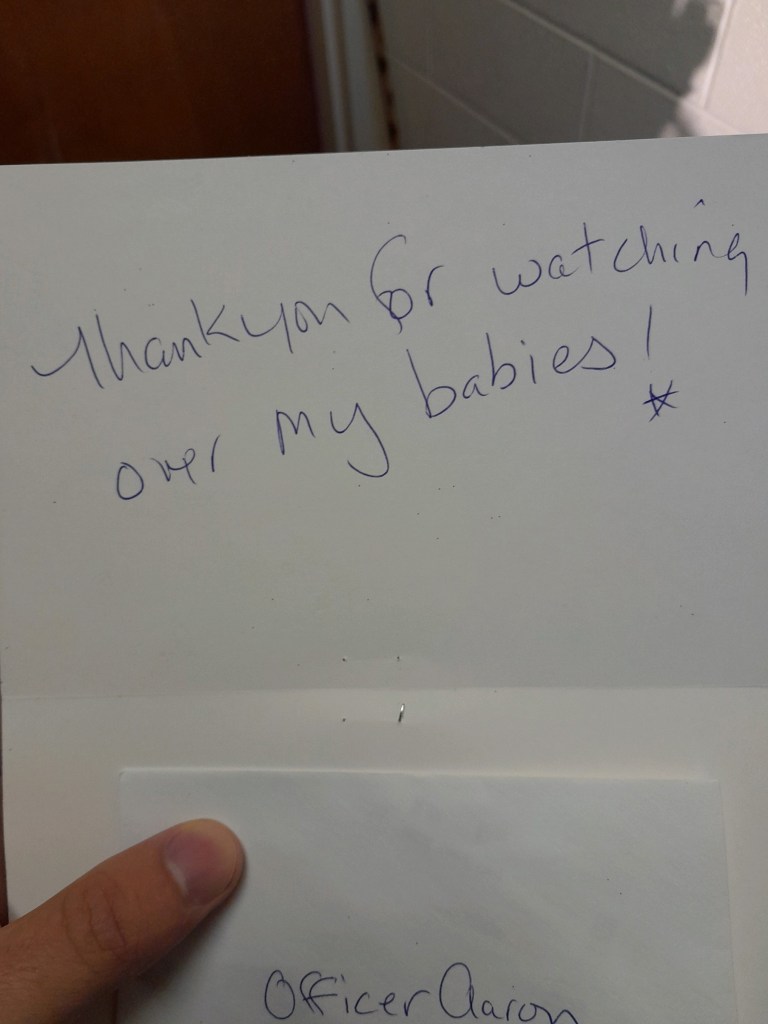
As an SSO, my Why is the school’s parents and students, and at times, their appreciation will manifest as little things. Little things that mean so much to me.
-
The Standard Response Protocol and the use of plain language is important when it comes to intruder and other school safety drills. It can still be done with age-appropriate education.
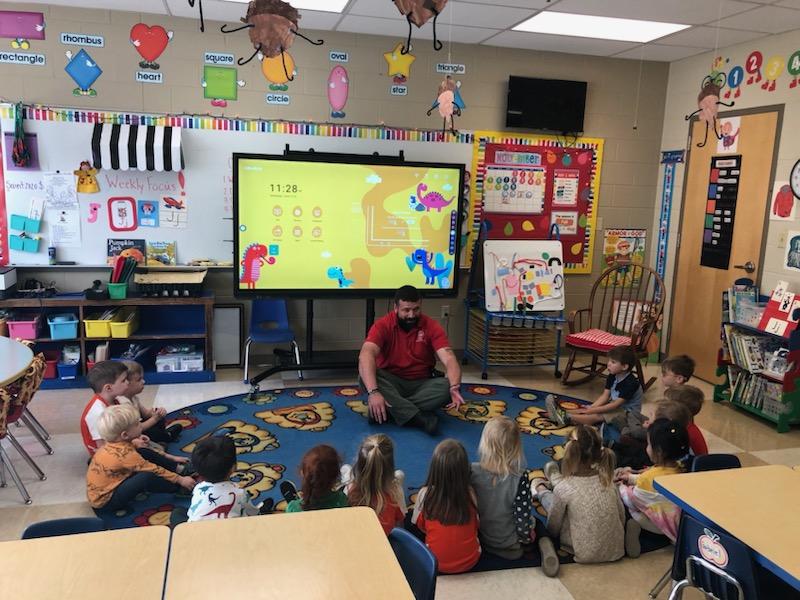
When I was hired to develop the SSO and school safety program at St. Jude, one thing that was extremely important to me was to use plain language when conducting intruder drills, to include the use of the word, “lockdown.” At the same time, making students, especially young students, comfortable and unafraid is equally important. When our elementary level students hear the word “lockdown,” that means it’s time for them to play a game of Quite as a Mouse!
-
I recently finished Jocko Willink’s and Leif Babins’s book, The Dichotomy of Leadership. It, along with their book, Extreme Ownership, is a great read, and I highly recommend both of those books to everyone. Reading Dichotomy has made me reflect on my own leadership philosophy and decisions, as well as the leaders that I have worked for. I can remember working for leaders who made me so angry. People have said to me that I have a problem with authority, to which I would usually reply, “No, I have a problem with stupidity. When that stupidity outranks me, that’s the rub.” After all, I had served in both the military and law enforcement. How could I possibly have a problem with authority? While both the military and law enforcement do have legitimately bad leaders, what I failed to realize is, at my level, I may not have been aware of the broader, strategic picture. This has become clearer to me as I’ve gone from a school resource and school safety officer to a school safety coordinator. That being said, there should always be someone willing to speak truth to power, but there is a way to do so. Further, mutual courtesy and respect should always be given, and egos should always remain in check. To some of my leaders that I perceived as “bad,” I apologize. I should have taken ownership and done more. At the very least, if someone is truly a bad leader, we could all still learn from them. Even if it is that we don’t want to be that kind of leader. With that being said, I have had some exceptionally GREAT leaders in both the Marine Corps and law enforcement. I had a former staff NCOIC when serving on the battalion staff at 7th Communication Battalion. Gregory Pacheco is his name. When I worked for him, he was a Staff Sergeant then a Gunnery Sergeant. Once I left the battalion staff, and went back to my communications platoon, I worked for (then) Lt. Jessica DeJesus. She was a brand new lieutenant, and we were her first platoon. When Gunny Pacheco was my SNCOIC, he had close to twenty years in the Marine Corps, while Lt. DeJesus had less than four. One enlisted. One officer. Two different ends of the years of service spectrum, and both incredible leaders. They both took a vested interest in their Marines, our struggles, but also how to help us get better. Both of them helped lead and mentor us as we moved through the ranks and began to shape our own career paths. When I transitioned into law enforcement, I had a primary field training officer, Brevin Cameron. Brevin and I were both military and Iraq War veterans. I am a few years older than Brevin, but he had been a police officer quite a few years longer than me. Just like my military mentors, Brevin took the time to get to know me on a personal level while also making sure that I was proficient enough to be a successful, proactive law enforcement officer. To Gregory, Jessica, and Brevin – Thank You!
 Aaron Yeargan - Speaker & Security Consultant